Local SEO for Pubs and Restaurants
Local SEO · Pub Marketing
Contents
- 1 Local SEO for Pubs and Restaurants: How to Win the Map Pack
- 1.1 Why the Local 3-Pack is where the covers are
- 1.2 1. Your Google review rating
- 1.3 2. Your Google Business Profile
- 1.4 3. Citations and NAP consistency
- 1.5 Measuring your local SEO: Share of Local Voice
- 1.6 FAQ
- 1.6.1 What is the Google Maps Local 3-Pack?
- 1.6.2 What Google review rating do pubs and restaurants need to rank locally?
- 1.6.3 How often should a pub or restaurant post on Google Business Profile?
- 1.6.4 What are citations and why do they matter?
- 1.6.5 Should a pub with rooms have a separate Google Business Profile?
Local SEO for Pubs and Restaurants: How to Win the Map Pack
The short version:
- The Google Maps Local 3-Pack drives more high-intent covers than almost anything else you can do. Most pubs and restaurants are leaving it on the table.
- Three levers: your Google review rating, your Google Business Profile activity, and your citation consistency. In that order of importance.
- Aim for 4.4 stars minimum. Respond to every review. Post weekly. Audit your citations for inconsistencies.
- If your venue offers rooms, create a separate GBP listing — two offers, two listings, double the map pack footprint.
This is a practical guide to the three things that actually move local rankings for pubs and restaurants. No jargon. No 47-point checklist. Just the 20% of actions that drive 80% of the result — which, for local search, is very much about reviews, your Google Business Profile, and citation consistency. In that order.
Why the Local 3-Pack is where the covers are
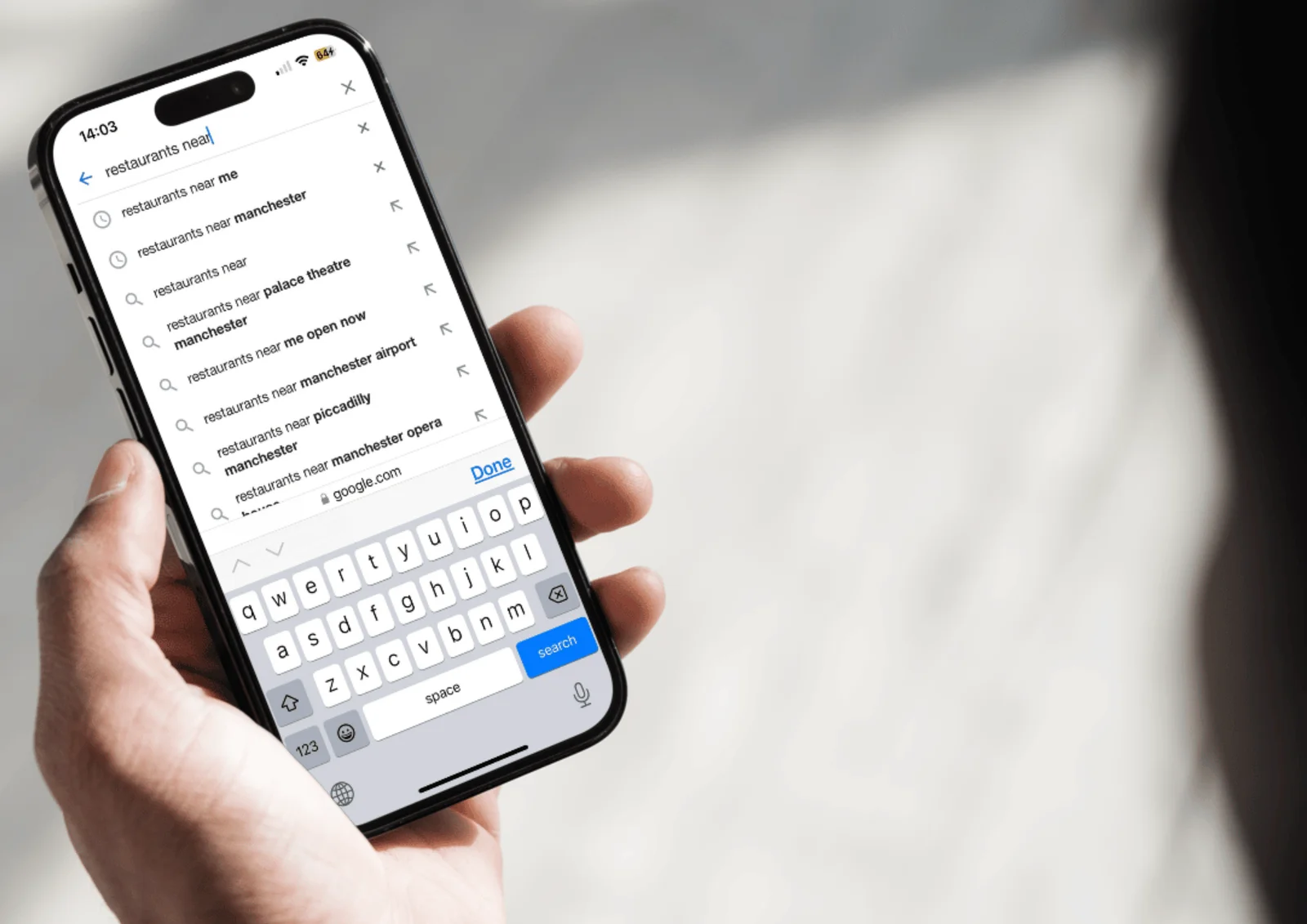
When someone opens Google on their phone and searches “pub near me” or “restaurants in Soho,” they see a map with three local listings before anything else. This is the Local 3-Pack. It captures 60–70% of all clicks for those searches. Position four onwards might as well not exist for most operators.
The critical thing to understand is that ranking in the 3-Pack is location-dependent. If you search for pubs from inside your own venue, you’ll likely appear at the top — but that tells you nothing about how you rank from the car park 200 metres down the road, or from the train station a mile away. Your goal is to rank as consistently as possible across the widest possible area around your venue.
Tools like Local Falcon run grid scans — checking your rank at dozens of points around your venue and calculating a Share of Local Voice percentage. This is the right way to track local SEO progress, not just checking your ranking while sitting in your own pub.
1. Your Google review rating
Of all the local ranking signals, star rating is the one I’ve seen make the most consistent, measurable difference. When I worked with Reputation across the Young’s estate to implement their review platform, their impact algorithm had Google Review Star Rating as the top-weighted factor. That tracks with what Google’s own documentation suggests and what I’ve seen repeated across dozens of venues since.
The benchmark for UK pubs and restaurants sits around 4.3 stars. Falling below this meaningfully suppresses local rankings, because Google reads a low star rating as a signal that it shouldn’t be promoting you to searchers — you might not deliver a good experience. Competitors with higher ratings get prioritised.
Aim for 4.4 or above. Here’s how to get and stay there:
Set up automated review requests
The most reliable way to maintain review volume isn’t asking staff to remember — it’s automation. Most booking platforms (ResDiary, SevenRooms, OpenTable) and CRM tools (Airship, Stampede, Klaviyo) can trigger a review request email or SMS a set number of hours after a booking is completed. Set this up once, leave it running, and your review volume builds steadily without any manual effort.
Include a direct link to your Google review page in every request — don’t make people search for you. The more friction between the request and the review, the lower your conversion rate.
Respond to every review
Responding to reviews is itself a local ranking signal. Google weighs response rate when calculating map pack position. Beyond the SEO benefit, a thoughtful response to a negative review is often read by future customers as carefully as the review itself. A defensive or dismissive reply does more damage than the original complaint.
Template your responses for efficiency — but vary them enough that they don’t look identical. Matching the venue’s tone, mentioning something specific from the review, and keeping positive responses brief all help.
Ask in-person — but stagger it
Asking regulars, friends, staff and family for reviews is completely legitimate. The one thing to be careful about is asking too many people at once — a sudden spike of reviews from the same IP range or in the same 24-hour window can trigger Google’s spam filters and result in reviews being removed. Stagger personal requests over days or weeks.
2. Your Google Business Profile
Most pubs and restaurants set up their Google Business Profile once and then ignore it. This is a mistake. Google actively rewards listings that show signs of being maintained — recent posts, updated information, regular review responses. A neglected GBP listing signals a potentially closed or unreliable business.
Post at least once a week
GBP posts (offers, events, specials, menu updates) contribute to local ranking and give searchers a reason to click through. The content doesn’t need to be elaborate — repurpose what you’re already creating for Instagram or Facebook. A weekly special, an event listing, a new menu item. The act of posting regularly is more important than the quality of any individual post.
Keep your information accurate
Hours, address, phone number. These sound obvious but are frequently wrong — especially around bank holidays, seasonal hours changes, and kitchen close times versus bar close times. Google actively de-prioritises listings where users have reported incorrect information. Check your hours quarterly at minimum, and update them before every bank holiday period.
Complete every relevant attribute
GBP attributes — outdoor seating, dog-friendly, private dining available, accepts reservations, wheelchair accessible, free Wi-Fi — feed directly into filtered searches. Someone searching “dog-friendly pubs near me” will only see listings that have the dog-friendly attribute enabled. Work through every attribute and enable every one that genuinely applies to your venue.
Photos — more than you think you need
GBP listings with fewer than 10 photos get dramatically fewer map views than listings with 25+. Aim for at least 25 photos across: food, drinks, interior, exterior, garden/terrace, events, and team. Update the photos quarterly — seasonally relevant images (a snow-covered beer garden in winter, a sunny terrace in summer) signal an active listing and give searchers a more accurate picture of what to expect.
This is the kind of work we do inside every pub marketing engagement — it sounds simple, but consistently maintained GBP listings are genuinely rare in the sector.
3. Citations and NAP consistency
Citations are any mention of your business name, address and phone number on third-party sites — TripAdvisor, Yelp, OpenTable, DesignMyNight, local directories, your Chamber of Commerce listing. Google cross-references these to verify your business information and build trust in your listing.
The issue isn’t whether you have citations. Most venues do. The issue is whether they’re consistent.
The NAP consistency problem
Name, Address, Phone — these three fields need to be identical across every listing. Not approximately identical. Identical. “The Crown” and “The Crown Pub” are different to Google’s parser. “07887 413 897” and “07887413897” are different. A previous phone number that’s still live on an old TripAdvisor listing is an active problem suppressing your local ranking right now.
Audit your top 20 citations — TripAdvisor, Yelp, OpenTable, ResDiary/Collins, DesignMyNight, Yell, Bing Places, Apple Maps, Facebook — and fix any discrepancy you find. This is a one-time audit that takes a few hours and then just needs maintaining when information changes.
Remove duplicates
If your venue has changed name, ownership, or address in the last few years, there’s a good chance you have duplicate listings on some platforms. A pub that was “The Red Lion” before becoming “The Crown” may have two TripAdvisor listings — one under each name. Google sees this as confusion about whether you’re the same business. Find and merge or remove any duplicates.
Pubs with rooms: create a separate listing
If your pub offers accommodation, a separate Google Business Profile for the hotel side significantly expands your search footprint. Your pub listing captures food and drink searches; your hotel listing captures accommodation searches. Two distinct offers, two distinct listings, double the map pack opportunities. This is an underused tactic in destination pubs and country gastropubs with rooms.
The biggest mistake operators make with local SEO is measuring rank by searching for themselves from their own venue. You’ll almost always appear at position one — you’re searching from inside your own premises. That tells you nothing about how you rank for customers searching from elsewhere in your trade area.
The right metric is Share of Local Voice (SoLV) — what percentage of the map pack grid points around your venue do you appear in, and at what average rank? Tools like Local Falcon run grid scans across dozens of geographic points and produce this number. It’s the metric we use to track local SEO progress for every venue we work with, because it reflects what actual customers searching from various locations actually see.
A new or optimised listing might start at 5–15% SoLV. A well-maintained listing in a competitive market can reach 60–80%. Track this monthly — it’s the one number that captures whether your local SEO programme is working.
FAQ
What is the Google Maps Local 3-Pack?
The Local 3-Pack is the block of three business listings that appears at the top of Google search results when someone searches for a nearby pub or restaurant. It includes a map and three listings with ratings, address and hours. Ranking in the 3-Pack is one of the highest-impact things a pub or restaurant can do for local visibility — it captures the majority of clicks for high-intent local searches.
What Google review rating do pubs and restaurants need to rank locally?
Aim for 4.4 stars or above. The industry average for pubs and restaurants sits around 4.3 stars. Falling below this threshold makes it significantly harder to rank in the Local 3-Pack — Google factors star rating into its local ranking algorithm and uses it as a proxy for whether you’ll deliver a good experience to searchers.
How often should a pub or restaurant post on Google Business Profile?
At minimum once a week. Google prioritises active, frequently-updated listings. Posting about offers, events, seasonal menus and weekly specials signals to Google that your listing is current and maintained. Repurpose content you’re already creating for Instagram or Facebook — it takes minutes to cross-post.
What are citations and why do they matter?
Citations are any mention of your business name, address and phone number on third-party sites — TripAdvisor, Yelp, OpenTable, DesignMyNight, local directories. Google cross-references these to verify your business information. Inconsistencies — a different phone number on TripAdvisor, a slightly different name on Yelp — weaken your trustworthiness in Google’s eyes and suppress local rankings.
Should a pub with rooms have a separate Google Business Profile?
Yes. If your pub offers accommodation, creating a separate Google listing for the hotel/rooms side significantly expands your search footprint. The pub listing ranks for food and drink queries; the hotel listing ranks for accommodation queries. Two distinct offers, two distinct listings, more map pack opportunities.